

What Are the Main Features of Air-Cooled Diesel Generators?
Air-cooled diesel generators are a ubiquitous and versatile class of power equipment, found on construction sites, powering remote farms, supporting small businesses, and providing backup for homes. They represent a compelling balance of power, durability, and simplicity. Unlike their larger, liquid-cooled cousins designed for continuous prime power, air-cooled models are engineered for standby duty, intermittent use, and applications where portability and cost-effectiveness are paramount.
Understanding their core features is essential for selecting the right generator for a given task. This article delves into the defining characteristics, advantages, limitations, and ideal applications of air-cooled diesel generators.
1. The Defining Feature: The Direct Air-Cooling System
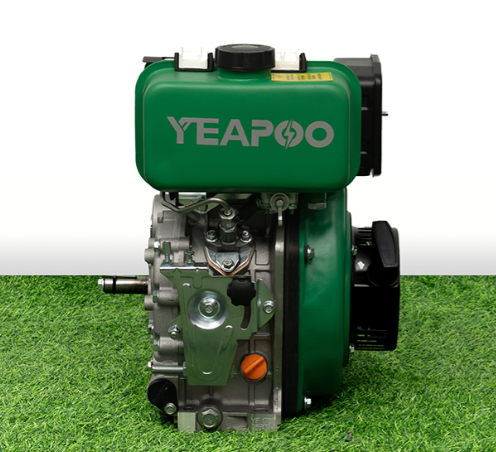
At the heart of an air-cooled diesel generator is its namesake cooling mechanism. Instead of using a liquid coolant (water and antifreeze) circulated through a radiator, these engines rely on direct air flow to manage heat.
How it Works
A high-inertia cooling fan, often integrated with the flywheel, draws ambient air over the engine. This air is forced across a series of fins cast into the engine's cylinder block and cylinder head. These fins dramatically increase the surface area exposed to the air, facilitating rapid heat transfer from the hot metal to the moving airstream, which is then expelled from the machine.
Key Components
The system is elegantly simple, consisting primarily of the cooling fan, engine fins, and ducting or shrouds designed to direct the airflow efficiently over the hottest parts. This simplicity translates directly into reliability and ease of maintenance.
2. Core Advantages and Features
The air-cooled design confers a set of distinct benefits that make these generators suitable for a wide range of applications.
A. Simplicity and High Reliability
The absence of a water pump, radiator, hoses, coolant, and thermostat eliminates many potential failure points. There is no risk of coolant leaks, freeze-ups, or pump failures. This mechanical simplicity makes air-cooled diesel engines inherently robust and less prone to catastrophic cooling system failures, a significant advantage in harsh or remote environments.
B. Ease of Maintenance and Service
Maintenance is straightforward. Primary tasks involve checking and changing the engine oil, cleaning or replacing the air filter, and ensuring the cooling fins are free of debris (like dust, leaves, or grass clippings) that could impede airflow. There is no coolant to test or replace, and the open structure often provides better access to components like the fuel filter and alternator.
C. Lightweight and Portable Design
Without the weight and bulk of a radiator, coolant reservoir, and associated plumbing, air-cooled diesel generators are significantly lighter than liquid-cooled units of similar power output. This, combined with their typically more compact frame, makes them ideal for portable applications. They are commonly mounted on wheel kits or lifting hooks, allowing them to be easily moved around job sites, between farm buildings, or loaded onto a truck.
D. Fast Cold-Start Capability (Relative to Liquid-Cooled)
Because there is no liquid coolant mass that must be warmed, air-cooled engines can reach their optimal operating temperature slightly faster from a cold start. This is a minor but notable benefit for standby applications where quick power pickup is needed.
E. Cost-Effectiveness
The simpler manufacturing process and fewer components result in a lower initial purchase price compared to a liquid-cooled diesel generator of equivalent power. This lower capital cost makes them an accessible and practical choice for applications with budget constraints or where the generator will see intermittent use.
3. Inherent Limitations and Considerations
The features that make air-cooled diesel generators advantageous in certain scenarios also define their operational boundaries. Understanding these limitations is crucial for proper application.
A. Limited Continuous Run Time and Duty Cycle: This is the most critical limitation. The air-cooling system is less efficient at heat dissipation than a liquid-based system. Under continuous high load, the engine components can run hotter. Therefore, manufacturers design them for standby or intermittent duty. Most are not rated for 24/7 operation. Common manufacturer guidelines recommend an 8-12 hour run time at near-full load, followed by a 1-2 hour cool-down period. Exceeding these limits risks overheating, which can lead to accelerated wear, oil breakdown, and potential engine seizure.
B. Higher Audible Noise Levels: The cooling fan is a significant source of noise, and the system requires high airflow, which is not easily silenced. While modern "super-silent" or "quiet" models use specially designed canopies lined with acoustic foam to dampen noise (often to levels between 65-75 dBA at 7 meters), a fundamentally open-frame air-cooled generator is louder than an enclosed liquid-cooled unit of similar power. This can be a factor in noise-sensitive environments like residential neighborhoods or hospitals.
C. Sensitivity to Ambient Temperature and Debris: Their cooling efficiency is directly tied to the temperature and cleanliness of the ambient air. Performance can suffer in extremely hot environments (desert climates, enclosed spaces) as the temperature differential between the engine and the cooling air is reduced. Conversely, they perform well in cold climates. The cooling fins are also vulnerable to clogging from dust, chaff, or other airborne debris, which can rapidly lead to overheating if not regularly cleaned.
D. Lower Power Density: Due to thermal management constraints, air-cooled diesel engines are generally not built in sizes above approximately 20-30 kVA for standby use. For higher power requirements, the engineering challenges of dissipating heat effectively with air make liquid cooling the necessary and more efficient choice. Therefore, air-cooled models dominate the small to mid-power range (typically 3 kVA to 22 kVA).
E. Potentially Shorter Engine Life Under Heavy Use: When operated within their designed duty cycle, they are extremely durable. However, if consistently pushed to their thermal limits or used for continuous prime power beyond their design, the higher operating temperatures can lead to faster degradation of engine components (rings, valves) compared to a liquid-cooled engine running at a more stable, lower temperature.
4. Technical Specifications and Common Configurations
A typical air-cooled diesel generator for the industrial/commercial market will feature:
| Component | Specifications & Features |
|---|---|
| Engine | A single-cylinder or V-twin cylinder, 4-stroke, direct injection diesel engine. Displacement ranges from ~300cc to ~1,000cc. Direct injection provides better fuel efficiency and cold-starting than older indirect injection systems. |
| Alternator | A brushless, self-excited, capacitor-regulated or AVR (Automatic Voltage Regulator) type. AVR models are preferred for powering sensitive electronics as they provide better voltage stability (±1-3%). |
| Fuel System | Integrated fuel tank (typically 5-25 liters), mechanical fuel injection pump, and a dual-stage filtration system (primary sedimentor/water separator and secondary fine filter). |
| Starting System | 12V electric start with a recoil backup is standard. Battery charging circuit is usually included. |
| Control Panel | Basic panels include AC outlets, circuit breakers, voltmeter, frequency meter, and engine warning lights (oil pressure, overheating). More advanced panels add hour meters, 3-phase voltage selection, and digital displays. |
| Enclosure | Available in Open Frame (durable, best cooling, lowest cost, noisy) or Canopy / Silent versions (acoustic and weather protection, better aesthetics, higher cost). |
5. Ideal Applications
Given their feature set, air-cooled diesel generators excel in the following scenarios:
Standby/Backup Power for Homes and Small Businesses
Providing emergency power during grid outages for essential circuits.
Construction and Job Sites
Powering hand tools, lighting, small compressors, and site offices. Portability is key.
Agriculture and Farming
Running irrigation pumps, barn equipment, and workshop tools in remote locations.
Mobile and Rental Applications
Easy to transport and deploy for events, disaster relief, or temporary power needs.
Industrial Intermittent Duty
As a power source for welding equipment, pressure washers, or other cyclical industrial processes.
Conclusion
Air-cooled diesel generators are not a one-size-fits-all solution, but they are an exceptionally fit-for-purpose technology. Their main features—mechanical simplicity, ease of maintenance, portability, and cost-effectiveness—are perfectly aligned with the needs of standby, mobile, and intermittent power applications. Their limitations, primarily the constrained continuous run time and higher noise profile, clearly define their operational envelope.
When selected and operated within this envelope—prioritizing reliability and mobility over 24/7 silent operation—an air-cooled diesel generator is an exceptionally tough, dependable, and valuable asset. The key to success lies in matching the generator's inherent features to the specific demands of the task at hand.
Explore YEAPOO's Air-Cooled Diesel Generators