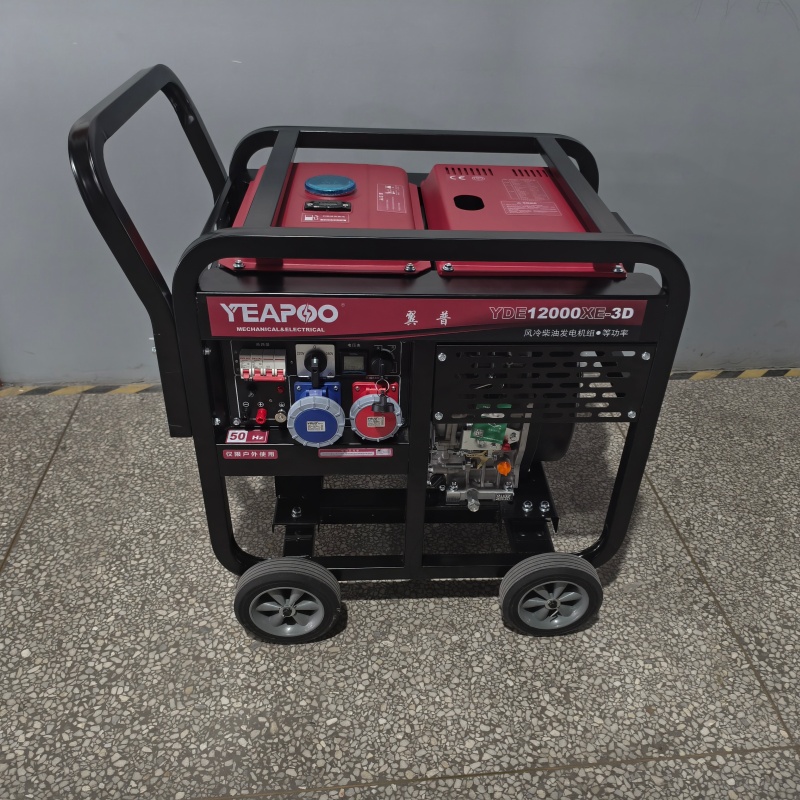
What is the difference between open and enclosed generators?
In the intricate symphony of modern engineering that powers our world, generators play the role of fundamental instruments, converting mechanical energy into the electrical current that fuels everything from our homes to our industries. While the core principle of electromagnetic induction remains constant, the execution varies dramatically based on environment, demand, and durability. The most significant design fork in this road is the choice between an open frame diesel generator (also known as an open drip-proof or ODP generator) and an enclosed generator (often referred to as a totally enclosed fan-cooled or TEFC generator). This distinction is not merely cosmetic; it defines the generator’s soul, its battlefield, and its longevity.
The Core Philosophy: A Question of Protection
At its heart, the difference is a simple trade-off: exposure versus isolation.
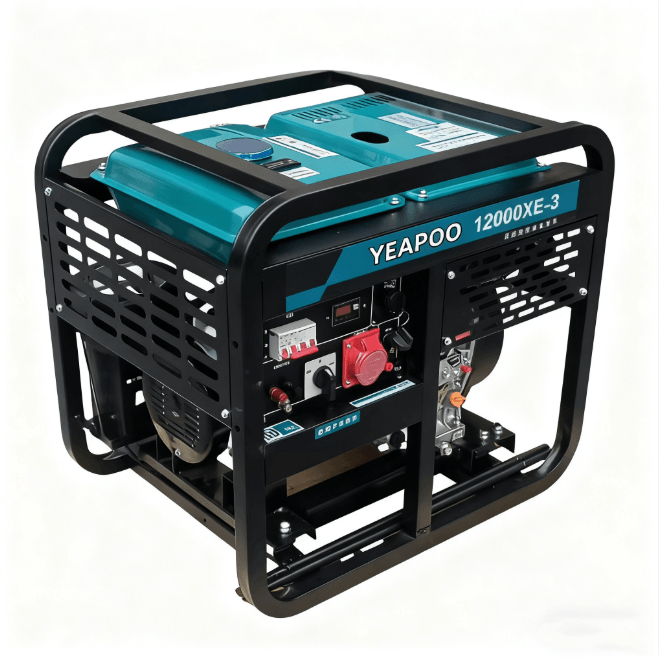
An open frame diesel generator is, as the name implies, open to its surrounding environment. Its design includes ventilation openings that allow external cooling air to be drawn in and circulated over and around the stator and rotor windings by an integral fan, before being expelled. This design offers a direct and efficient cooling path. However, this openness is a double-edged sword; while it cools effectively, it also allows for the ingress of airborne contaminants.
An enclosed generator is a sealed fortress. Its casing is designed to prevent the free exchange of air between the inside of the generator and the outside world. In the most common TEFC design, an external fan is mounted on the shaft, blowing air over the outside of the sealed enclosure, which is often ribbed to increase surface area and improve heat dissipation—much like a radiator. The internal heat must conduct through the enclosure to be removed, creating a barrier between the delicate internals and the external environment.
This fundamental divergence in philosophy manifests in several critical operational differences, which can be broken down into key comparative categories.
1. The Ingress Protection (IP) Rating: The Shield Against the Elements
The IP rating, an international standard (IEC 60529), is the most precise way to quantify this difference. It consists of two digits: the first indicates protection against solid objects (dust, tools), and the second against liquids.
Open Generators (typically IP21 or IP23):
First Digit (2): Protection against solid objects larger than 12.5mm (e.g., fingers). It offers no protection against dust. Fine dust, fibers, and other particulates can freely enter the housing.
Second Digit (1/3): Protection against vertically falling drops of water (1) or water sprayed at an angle up to 60° from vertical (3). They are not waterproof and cannot withstand hose-directed water, rain, or snow ingress.
Enclosed Generators (typically IP54 or IP55):
First Digit (5): Dust-protected. Ingress of dust is not entirely prevented, but it cannot enter in sufficient quantity to interfere with safe operation or impair performance.
Second Digit (4/5): Protection against water splashes from all directions (4) or low-pressure water jets from any direction (5). This makes them highly resilient in damp, wet, or wash-down environments.
Verdict: The enclosed generator’s superior IP rating is its primary advantage, creating a clear demarcation in suitable applications.
2. Cooling Efficiency and Thermal Management
This is where the open frame diesel generator traditionally shines.
Open Generators: The direct airflow over the hot windings provides exceptional cooling efficiency. This allows for a more compact design for a given power output, as heat is removed rapidly and directly. They often run at lower internal temperatures than enclosed units of the same size because the cooling medium (air) is in direct contact with the heat source.
Enclosed Generators: The enclosure acts as a thermal barrier. Heat must travel from the copper windings, through insulation, across an air gap, and through the metal enclosure before being removed by the external airflow. This less direct path makes cooling less efficient. Consequently, for the same physical frame size, an enclosed generator often has a lower continuous power rating or must be physically larger to achieve the same output as an open model. The need for external cooling fins and a larger fan also adds to the cost and bulk.
Verdict: Open generators win in cooling efficiency and power density. Enclosed generators sacrifice some thermal performance for the sake of internal component protection.
3. Application Domains: Choosing the Right Warrior
The choice is overwhelmingly dictated by the operating environment.
Ideal Applications for open frame diesel generator:
Clean, Indoor, Climate-Controlled Rooms: This is their natural habitat. Think of a dedicated, ventilated generator room in a hospital, data center, or office building, where temperature, humidity, and air quality are managed.
Standby Power Systems: Where the generator runs infrequently (for testing and during power outages) in a protected environment.
Large Industrial Plants with Dedicated Rooms: Where the cost-saving of open designs can be leveraged on a large scale, and the infrastructure for clean air intake (with filters) exists.
Any application where the air is free of abrasives, conductive dust, moisture, and corrosive fumes.
Ideal Applications for Enclosed Generators:
Outdoor Installations: The default choice for any generator set placed outside, exposed to rain, snow, sleet, and blowing dust.
Harsh and Dirty Environments: Manufacturing plants (woodshops, textile mills, food processing with flour or powder), mining operations, construction sites, agricultural settings, and wastewater treatment plants.
Marine and Offshore Applications: Where salty, moist, and corrosive air is prevalent.
Applications Requiring Washdown: Food and beverage production, pharmaceutical facilities, or any place where equipment is regularly cleaned with high-pressure water or steam.
Mobile and Portable Applications: On service vehicles, mobile broadcast units, or portable gensets that face constantly changing conditions.
4. Maintenance, Longevity, and Total Cost of Ownership
Maintenance: Open frame diesel generators require more frequent and meticulous maintenance in all but the cleanest environments. Air intake filters must be checked and cleaned or replaced regularly to prevent clogging, which can lead to overheating. The internals are also more accessible for inspection. Enclosed generators, with their sealed nature, require less frequent internal attention. Maintenance is focused more on external cleaning of the cooling fins and fan guard to ensure heat dissipation is not blocked.
Longevity: In a clean environment, both types can have exceptionally long lives. However, in a typical or challenging environment, the enclosed generator almost always boasts a longer service life. By sealing out contaminants like dust (which abrades insulation), moisture (which causes corrosion and short circuits), and chemical vapors, the critical windings and bearings are preserved. The initial higher cost of an enclosed unit is frequently offset by reduced downtime, lower maintenance costs, and extended operational life.
Noise: Enclosed generators often have a slight acoustic advantage, as the metal enclosure can help dampen electromagnetic noise (hum), though the primary source of noise is the engine, not the alternator.
Conclusion: A Strategic Compromise, Not Just a Choice
Selecting between an open and enclosed generator is a fundamental engineering and economic decision. It is a strategic compromise between efficiency and protection, initial cost and total cost of ownership.
Choose an open generator when: Your environment is pristine, controlled, and indoor. You are optimizing for first cost, compact size, and maximum power density for a given frame, and you have the infrastructure and discipline to maintain clean airflow.
Choose an enclosed generator when: Your environment is anything less than perfect—outdoors, damp, dusty, or corrosive. You are optimizing for reliability, durability, and minimized maintenance. You are willing to invest more upfront for a ruggedized unit that can survive and thrive where an open unit would fail.
In the end, the enclosed generator is the rugged, all-terrain vehicle of the electrical world, built to endure the journey. The open frame diesel generator is the high-performance sports car, designed for the smooth, controlled track. Understanding their differences ensures that the guardian you choose for your critical power is not just capable, but is perfectly suited for the battlefield it will face.