

Are Diesel Generators Better Than Gas?
Diesel or gas? It’s one of the most common questions for anyone considering backup power. Diesel generators are often praised for durability and efficiency, while gas units are marketed as quieter and easier to install. To help you decide, this article breaks down how diesel generators work, their real-world performance, and whether they’re the right fit for your needs.
How Do Diesel Generators Work?
A diesel generator combines two core systems:
Diesel engine – Compresses air in each cylinder to a high ratio (typically 14:1 to 25:1). This compression creates intense heat. Near the end of the compression stroke, fuel is injected directly into the cylinder, where it ignites spontaneously without spark plugs.
Alternator – The engine spins the alternator’s rotor, creating a magnetic field that induces alternating current (AC) in the stator windings. The output is then conditioned through a voltage regulator and circuit breaker to supply stable electricity.
Unlike gasoline engines, diesel engines rely on compression ignition, which allows them to extract more energy from each drop of fuel and operate under heavy loads for extended periods.
Are Diesel Generators Loud?
Yes—but with important context.
Unenclosed industrial units: Can exceed 85–100 dB at full load, comparable to a lawn mower or jackhammer.
Residential standby models: With sound-attenuated enclosures, many run at 60–75 dB, similar to normal conversation or a vacuum cleaner.
Installation factors: Placing the generator on a concrete pad, using flexible connectors, and adding acoustic barriers can further reduce perceived noise.
If noise is a top concern, look for “low-noise” or “super-silent” models and check the manufacturer’s dB rating at 7 meters or 23 feet.
Are Diesel Generators More Efficient?
In most real-world applications, yes.
Thermal efficiency: Diesel engines typically achieve 30–40% thermal efficiency, versus 20–30% for gasoline engines.
Fuel energy density: Diesel contains about 139,000 BTU per gallon, compared to roughly 115,000 BTU per gallon for gasoline—about 20% more energy per unit volume.
Partial-load behavior: Diesels maintain relatively good efficiency even at partial loads, whereas gasoline generators lose efficiency quickly when not near full load.
For facilities running long hours or carrying sustained loads (e.g., data centers, farms, hospitals), diesel efficiency translates into meaningful fuel savings over time.
Can a Diesel Generator Power a House?
Absolutely—if sized correctly.
Typical residential loads include:
HVAC systems (central AC or heat pump): 2,000–5,000 W starting surge
Refrigerator/freezer: 600–1,200 W running, ~3× surge
Lighting and electronics: 300–800 W combined
Well pump (if applicable): 750–1,500 W running, high starting surge
A properly sized diesel standby generator for whole-house coverage usually ranges from 8 kW to 20 kW, depending on climate, home size, and which appliances must run simultaneously. For critical loads only (lights, fridge, router, small heater), a 5–7 kW unit may suffice.
Key considerations:
Use a load calculator or consult an electrician.
Decide between automatic transfer switch (ATS) or manual switching.
Ensure local code compliance and proper fuel storage.
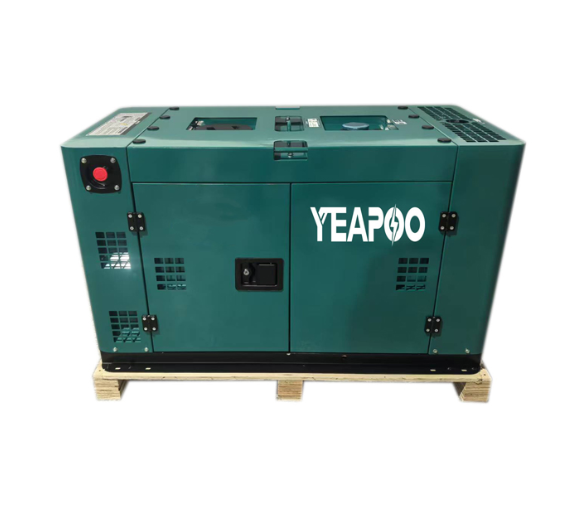
Can You Run a Diesel Generator 24/7?
Technically, yes—but with conditions.
Continuous vs. standby rating:
Standby rating: Intended for occasional use (e.g., outages), typically 200–500 hours per year.
Prime/continuous rating: Designed for prolonged operation, often 24/7 in industrial settings.
Maintenance demands:
Oil and filter changes every 100–250 hours (or per manufacturer schedule).
Regular coolant checks, fuel filtration, and battery inspection.
Scheduled load banking to prevent wet stacking (unburned fuel buildup in exhaust).
Fuel logistics:
Large on-site tanks or regular refueling.
Fuel polishing to prevent microbial growth and water contamination.
For true 24/7 reliability, choose a continuous-rated model, follow a strict maintenance plan, and ensure redundant systems if downtime is unacceptable.
How Does a Diesel Generator Start?
Starting sequences vary by design:
Manual start (portable units):
Turn fuel valve on.
Set choke (cold engine).
Activate starter motor via key or push-button.
Automatic start (standby generators):
Utility power fails → ATS detects outage.
Generator controller initiates pre-start checks (oil pressure, coolant temp, battery voltage).
Starter motor cranks engine until ignition and stable RPM are achieved.
After warm-up delay, ATS switches load from utility to generator.
Cold climates may require glow plugs or block heaters to assist starting.
How Long Do Diesel Generators Last?
Longevity depends heavily on quality, usage, and maintenance.
Portable diesel generators: Often 5,000–10,000 hours with diligent care.
Stationary standby units: 10,000–30,000+ hours is common.
Industrial prime-power sets: Can exceed 50,000 hours before major overhaul.
Best practices to extend life:
Adhere strictly to service intervals.
Avoid chronic underloading (run at ≥ 30% of rated capacity when possible).
Use high-quality fuel and filters.
Perform annual load testing.
How to Calculate Cost per kWh for a Diesel Generator
To compare diesel against grid power or gas generators, calculate the levelized cost per kilowatt-hour:
Step 1: Determine fuel consumption
Use the manufacturer’s fuel curve (gallons per hour at specific load %). Example:
20 kW generator burns 1.2 gal/hr at 75% load (15 kW output).
Step 2: Compute fuel cost per hour
Diesel price = $4.50/gallon
Fuel cost = 1.2 gal/hr × 5.40/hr
Step 3: Add operating costs
Include oil, filters, maintenance labor, and estimated repairs. For example:
$0.10/hr for maintenance allocation.
Total operating cost = 0.10 = $5.50/hr
Step 4: Calculate cost per kWh
Output = 15 kW
Cost per kWh = 0.367/kWh**
Compare this figure to your utility rate and to gas generator calculations to evaluate true cost-effectiveness.
Conclusion: Are Diesel Generators Better Than Gas?
There’s no universal answer—only trade-offs:
Choose diesel if you need high efficiency, long runtime, robust durability, and lower fire risk, and you can manage higher upfront cost and stricter emissions rules.
Choose gas if you prioritize quieter operation, simpler emissions compliance, lower initial investment, and primarily need short-duration backup.
By understanding how diesel generators work, how they perform in noise, efficiency, runtime, and lifespan, and how to calculate their real cost per kWh, you can make an informed decision tailored to your power priorities—whether for a home, farm, business, or critical facility.